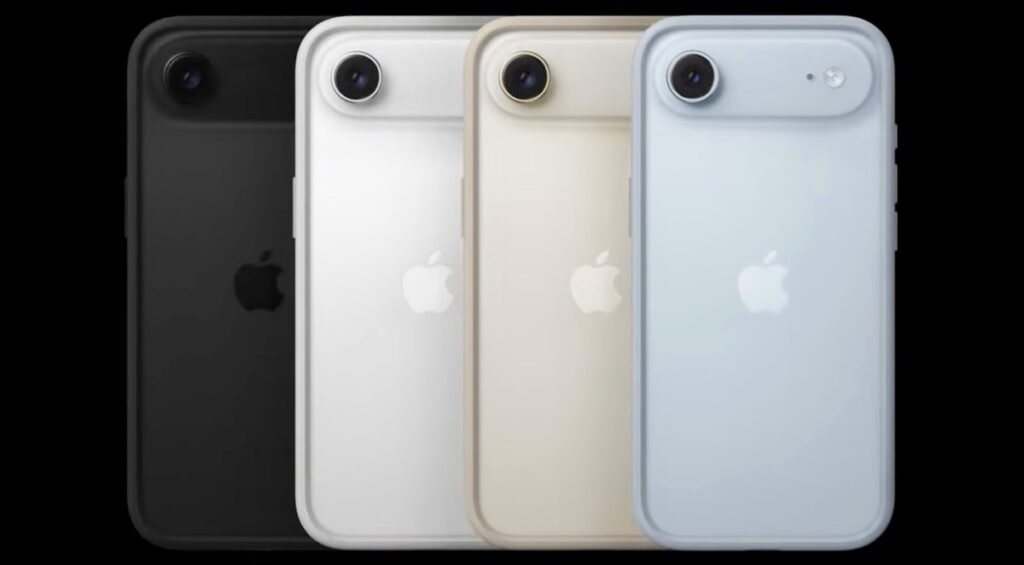
At yet another splashy event, Apple on Tuesday introduced its latest lineup of iPhones: theiPhone 17,17 Pro, 17 Pro Max,and a new slimmer version dubbedthe iPhone Air.The “Air” branding is meant to bring to mind other lightweight — andsometimesless expensive — Apple products like the MacBook Air and iPad Air. But it also recalls a time when smartphone makerswerechasingan ever-thinner phone. In the AI era, however, it’s not necessarily the device’s size that matters; it’s what the software it runs can do.
At its iPhone 17 event, the company only referenced AI technology a few times: to rehash someupdates announced in June at WWDC, like Visual Intelligence and its on-device models, and in some aspects of its camera upgrades, like the iPhone 17’s front camera, which itcallsCenter Stage.
The most compelling use of AI wasn’t even introduced as a phone upgrade; it wasthe AI-powered Live Translation feature coming to Apple’s AirPods 3.
There was no mention of Siri at all, AI-powered or otherwise.
MuchhasbeenmadeabouthowApple’s miscalculation on AI could negatively affect its industry standing and future success. Meanwhile, Google last month rolled out its latest release of anAI-powered Android phone with its Pixel 10, as iPhone owners still await an AI Siri that’s beendelayed until 2026.
Until now, Apple has only released what could be consideredbaseline AI featuresfor its devices, like AI writing tools, summarization, generative AI images (whichsomecomplainare not very good), live translation, visual search, andGenmoji, among others. Yet a digital assistant that understands a wide range of questions — without deferring to ChatGPT — or one that can provide further context from your iPhoneappsremains overdue.
Recently, it was reported that Apple is looking to third parties to help it catch up in the AI race. An AI-enhanced Siri could be running some other technology — likeGoogle Gemini— under the hood.
At first glance, this delay, combined with the decision to rely on a third party — or even, possiblya sizable acquisition— seems like it could spell bad news for Apple. However, Apple’s decision to outsource some of the phone’s AI technology could actually become a selling point for consumers.
Today’s iPhone owners often swap out Apple’s technology for Google’s by opting for Gmail, Google Drive and Docs, Google Maps, and Chrome over Apple’s own apps like Mail, its iWork suite, Apple Maps, and Safari, for example. When people search the web, they turn to Google’s Search app, not Apple’s built-in Spotlight search, despite itsmany integrations over the yearsto offer basic facts and answers, leveraging sources like Wikipedia. Why, then, shouldn’t they be able to use Google’s AI technology, too?
If Apple does proceed with a third-party deal to integrate AI into its devices, it may work out to be an even bigger win for iPhone owners. It would mean that high-performing AI technology would be integrated into the device more natively. It would feel more seamless, more a part of the iPhone experience itself than simply running an AI app. And Apple could get there without having toinvest as heavily in the infrastructurerequired to compete in the AI race, which is good for the company’s (already healthy) bottom line.
Plus, given the speed with which AI technology has been evolving, this design would leave room for Apple to swap out models or expand support to include others, as AI companies edge themselves ahead of others.
The result for consumers would be the best of both worlds: the aesthetics and hardware quality (thinness and all!) of the iPhone, with Google’s technology (or Anthropic’s or OpenAI’s) powering some of the key AI components. That could also be beneficial to Apple’s overall brand.
It also means that the look-and-feel of updated iPhones themselves and their hardware advances will continue to drive sales and upgrades, allowing Apple to do what it does best: focus on build quality, camera improvements,privacy-preserving tech, intentional softwaredesign changes like Liquid Glass— and yes, super thin phones.
Apple could continue to market itself as a best-in-class hardware maker first, not an AI device maker; customers could still long for the latest iPhones, as always, without having to sacrifice the latest technology advances when they make the choice to buy a phone from Apple.
Of course, this scenario only plays out if and when Apple opts to launch a version of Siri that runs a third-party’s AI technology to enhance its own. (Or if it buys an AI company). But if Apple decides to only rely on its Apple Intelligence offerings without getting them up to speed quickly, the outcome could be much different.
Source: Techcrunch