Latest News

Harvard’s ultra-thin chip could revolutionize quantum computing

Harvard’s ultra-thin chip could revolutionize quantum computing Researchers blend theoretical insight and precision experiments to entangle photons on an ultra-thin chip. New research shows that metasurfaces could be used as strong linear quantum optical networks This approach could eliminate the need for waveguides and other conventional optical components Graph theory is helpful for designing the […]

Harvard’s ultra-thin chip could revolutionize quantum computing Read More »

Harvard’s ultra-thin chip could revolutionize quantum computing

Harvard’s ultra-thin chip could revolutionize quantum computing Researchers blend theoretical insight and precision experiments to entangle photons on an ultra-thin chip. New research shows that metasurfaces could be used as strong linear quantum optical networks This approach could eliminate the need for waveguides and other conventional optical components Graph theory is helpful for designing the

Harvard’s ultra-thin chip could revolutionize quantum computing Read More »

Harvard’s ultra-thin chip could revolutionize quantum computing

Harvard’s ultra-thin chip could revolutionize quantum computing Researchers blend theoretical insight and precision experiments to entangle photons on an ultra-thin chip. New research shows that metasurfaces could be used as strong linear quantum optical networks This approach could eliminate the need for waveguides and other conventional optical components Graph theory is helpful for designing the

Harvard’s ultra-thin chip could revolutionize quantum computing Read More »
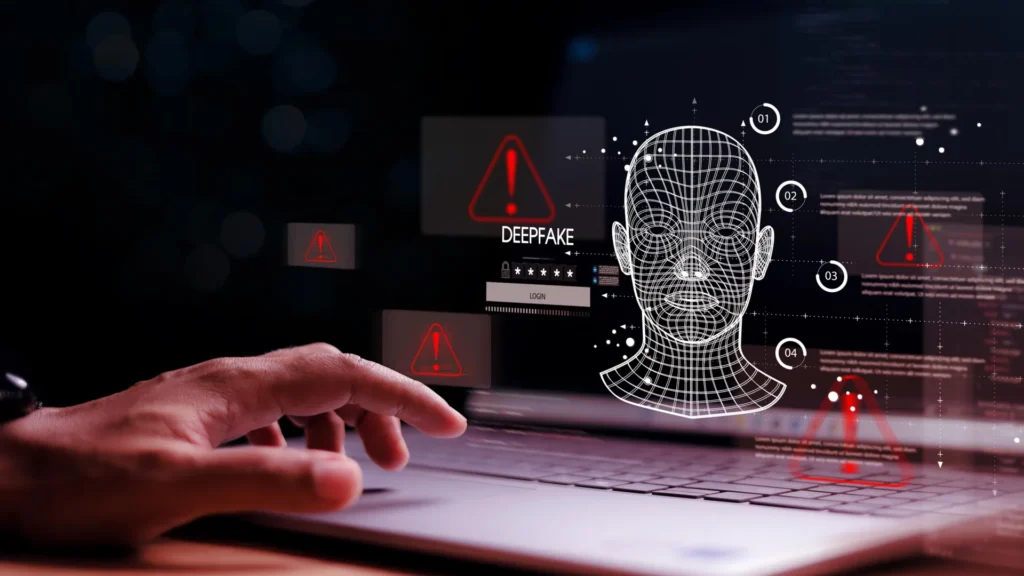
Google's deepfake hunter sees what you can’t—even in videos without faces

Google's deepfake hunter sees what you can’t—even in videos without faces In an era where manipulated videos can spread disinformation, bully people, and incite harm, UC Riverside researchers have created a powerful new system to expose these fakes. Amit Roy-Chowdhury, a professor of electrical and computer engineering, and doctoral candidate Rohit Kundu, both from UCR's

Google's deepfake hunter sees what you can’t—even in videos without faces Read More »

Google's deepfake hunter sees what you can’t—even in videos without faces

Google's deepfake hunter sees what you can’t—even in videos without faces In an era where manipulated videos can spread disinformation, bully people, and incite harm, UC Riverside researchers have created a powerful new system to expose these fakes. Amit Roy-Chowdhury, a professor of electrical and computer engineering, and doctoral candidate Rohit Kundu, both from UCR's

Google's deepfake hunter sees what you can’t—even in videos without faces Read More »

Google's deepfake hunter sees what you can’t—even in videos without faces

Google's deepfake hunter sees what you can’t—even in videos without faces In an era where manipulated videos can spread disinformation, bully people, and incite harm, UC Riverside researchers have created a powerful new system to expose these fakes. Amit Roy-Chowdhury, a professor of electrical and computer engineering, and doctoral candidate Rohit Kundu, both from UCR's

Google's deepfake hunter sees what you can’t—even in videos without faces Read More »

A simple twist fooled AI—and revealed a dangerous flaw in medical ethics

A simple twist fooled AI—and revealed a dangerous flaw in medical ethics A study by investigators at the Icahn School of Medicine at Mount Sinai, in collaboration with colleagues from Rabin Medical Center in Israel and other collaborators, suggests that even the most advanced artificial intelligence (AI) models can make surprisingly simple mistakes when faced

A simple twist fooled AI—and revealed a dangerous flaw in medical ethics Read More »

A simple twist fooled AI—and revealed a dangerous flaw in medical ethics

A simple twist fooled AI—and revealed a dangerous flaw in medical ethics A study by investigators at the Icahn School of Medicine at Mount Sinai, in collaboration with colleagues from Rabin Medical Center in Israel and other collaborators, suggests that even the most advanced artificial intelligence (AI) models can make surprisingly simple mistakes when faced

A simple twist fooled AI—and revealed a dangerous flaw in medical ethics Read More »

A simple twist fooled AI—and revealed a dangerous flaw in medical ethics

A simple twist fooled AI—and revealed a dangerous flaw in medical ethics A study by investigators at the Icahn School of Medicine at Mount Sinai, in collaboration with colleagues from Rabin Medical Center in Israel and other collaborators, suggests that even the most advanced artificial intelligence (AI) models can make surprisingly simple mistakes when faced

A simple twist fooled AI—and revealed a dangerous flaw in medical ethics Read More »

Scientists discover the moment AI truly understands language

Scientists discover the moment AI truly understands language A study in JSTAT describes the sharp shift in text comprehension strategies during neural network training. The language capabilities of today's artificial intelligence systems are astonishing. We can now engage in natural conversations with systems like ChatGPT, Gemini, and many others, with a fluency nearly comparable to

Scientists discover the moment AI truly understands language Read More »

Scroll to Top