Want smarter insights in your inbox? Sign up for our weekly s to get only what matters to enterprise AI, data, and security leaders.Subscribe Now
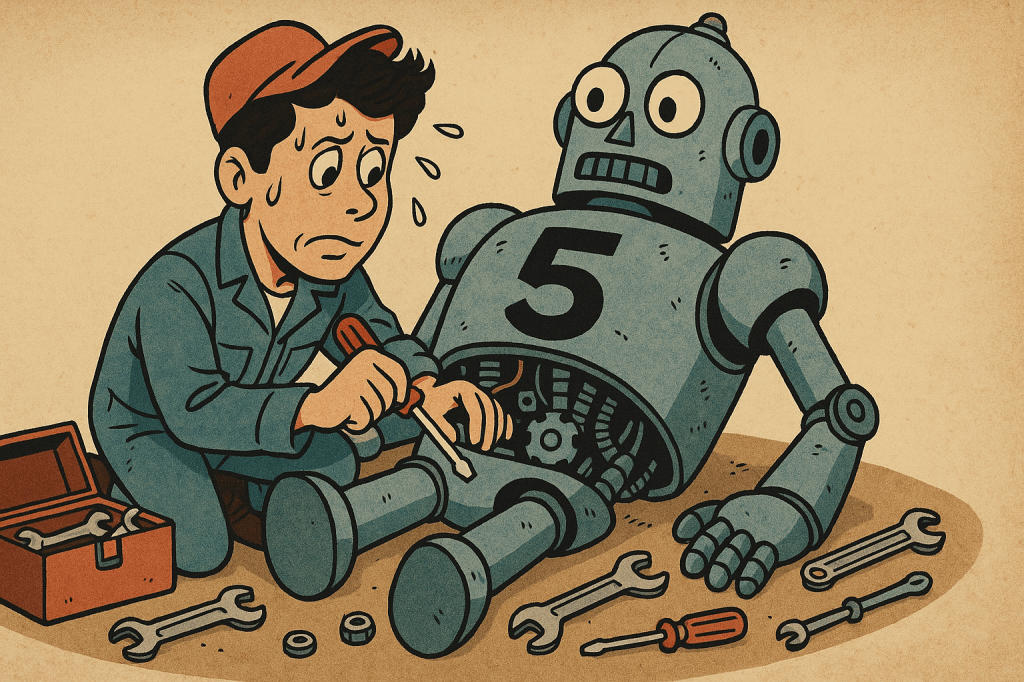
OpenAI co-founder andCEO Sam Altman is publicly acknowledging major hiccups in yesterday’s rollout of GPT-5, the company’s new, flagship large language model (LLM) — advertised as its most powerful and capable yet.
Answering user questionsin a Reddit AMA (Ask Me Anything) threadandin a post on Xthis afternoon,Altman admitted to a range of issues that have disrupted the launch of GPT-5, including faulty model switching, poor performance, and user confusion— prompting OpenAI to partially walk back some of its platform changes andreinstate user access to earlier models like GPT-4o.
“It was a little more bumpy than we hoped for,” Altman wroteinreply to a question on Redditregarding the big GPT-5 launch.
As forerroneous model performance chartsshown off during OpenAI’s GPT-5 livestream, Altmansaid:“People were working late and were very tired, and human error got in the way.A lot comes together for a livestream in the last hours.”
Power caps, rising token costs, and inference delays are reshaping enterprise AI. Join our exclusive salon to discover how top teams are:
- Turning energy into a strategic advantage
- Architecting efficient inference for real throughput gains
- Unlocking competitive ROI with sustainable AI systems
Secure your spot to stay ahead:
While he noted the accompanying blog post and system card were accurate, the missteps further muddied a launch already facing scrutiny from early users and developers.
GPT-5 rollout updates:*We are going to double GPT-5 rate limits for ChatGPT Plus users as we finish rollout.*We will let Plus users choose to continue to use 4o. We will watch usage as we think about how long to offer legacy models for.*GPT-5 will seem smarter starting…— Sam Altman (@sama) August 8, 2025
GPT-5 rollout updates:*We are going to double GPT-5 rate limits for ChatGPT Plus users as we finish rollout.*We will let Plus users choose to continue to use 4o. We will watch usage as we think about how long to offer legacy models for.*GPT-5 will seem smarter starting…
One key reason for the trouble according to Altman stems from OpenAI’s new automatic “router” that assigns user prompts to one of four GPT-5 variants — regular, mini, nano, and pro — with an optional “thinking” mode for heavier reasoning tasks.
On X,Altman revealed that a key part of that system — the autoswitcher — was “out of commission for a chunk of the day,” causing GPT-5 to appear “way dumber” than intended.
In response, OpenAI says it’s implementing changes to the model decision boundary and will make it more transparent which model is responding to a given query.
A UI update is also on the way to help users manually trigger thinking mode.
Additionally, Altman confirmed thatOpenAI will now allow ChatGPT Plus users to continue using GPT-4o — the prior default model—after a wave of complaints about GPT-5’s inconsistent performance. Hesaid on Redditthe company is “trying to gather more data on the tradeoffs” before deciding how long to offer legacy models.
they brought back the old models!!!! (it's in settings under "legacy models") pic.twitter.com/0MN85jmicG— ben (@benhylak) August 8, 2025
they brought back the old models!!!! (it's in settings under "legacy models")pic.twitter.com/0MN85jmicG
Yetmany usersincludingOpenAI beta testers like Wharton School of Business professor Ethan Mollickexpressed confused and dismay atOpenAI unilaterally upgrading their ChatGPT experiences to GPT-5 and initially taking away access to the older models.
OpenAI’s internal benchmarks may show GPT-5 leading the pack of LLMs, but real-world users are sharing a different experience.
Since the launch,users have posted numerous examples of GPT-5 making basic errors in math, logic, and coding tasks.
Data scientistColin Fraser posted screenshots of GPT-5 incorrectly solving whether 8.888 repeating equals 9 (it does not, obviously), while another user showed it flubbing a simple algebra problem: 5.9 = x + 5.11.
And still other users reported trouble getting accurate answers to math word problems or using GPT-5 to debug its own presentation charts.
Developer feedback hasn’t been much better, withusers posting images of GPT faring worse at “one-shot” certain programming tasks— completing them well with a single-prompt —compared to rival AI lab Anthropic’s new model Claude Opus 4.1.
And security firmSPLX found GPT-5 still suffers from serious vulnerabilitiesto prompt injection and obfuscated logic attacks unless its safety layer is hardened.
With700 million weekly users on ChatGPT,OpenAI remains the largest player in generative AI by audience.
But that scale has brought growing pains.Altman noted in his X post thatAPI traffic doubled over 24 hours following the GPT-5 launch, contributing to platform instability.
In response, OpenAI says it will double rate limits for ChatGPT Plus users, and continue to tweak infrastructure as it gathers feedback.
But the early missteps — compounded by confusing UX changes and errors in a high-profile launch — haveopened a window for rivals to gain ground.
The pressure is on for OpenAI to prove that GPT-5 isn’t just an incremental update, but a true step forward. Based on the initial rollout, many users aren’t convinced — yet.
Source: Venturebeat